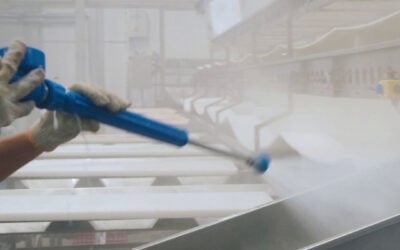
A hygiene crew foams a conveyor, walks away for their break, and comes back to hose it off. On paper, the clean happened. In reality, nothing scrubbed the soil off the surface, and the foam just sat there looking productive.
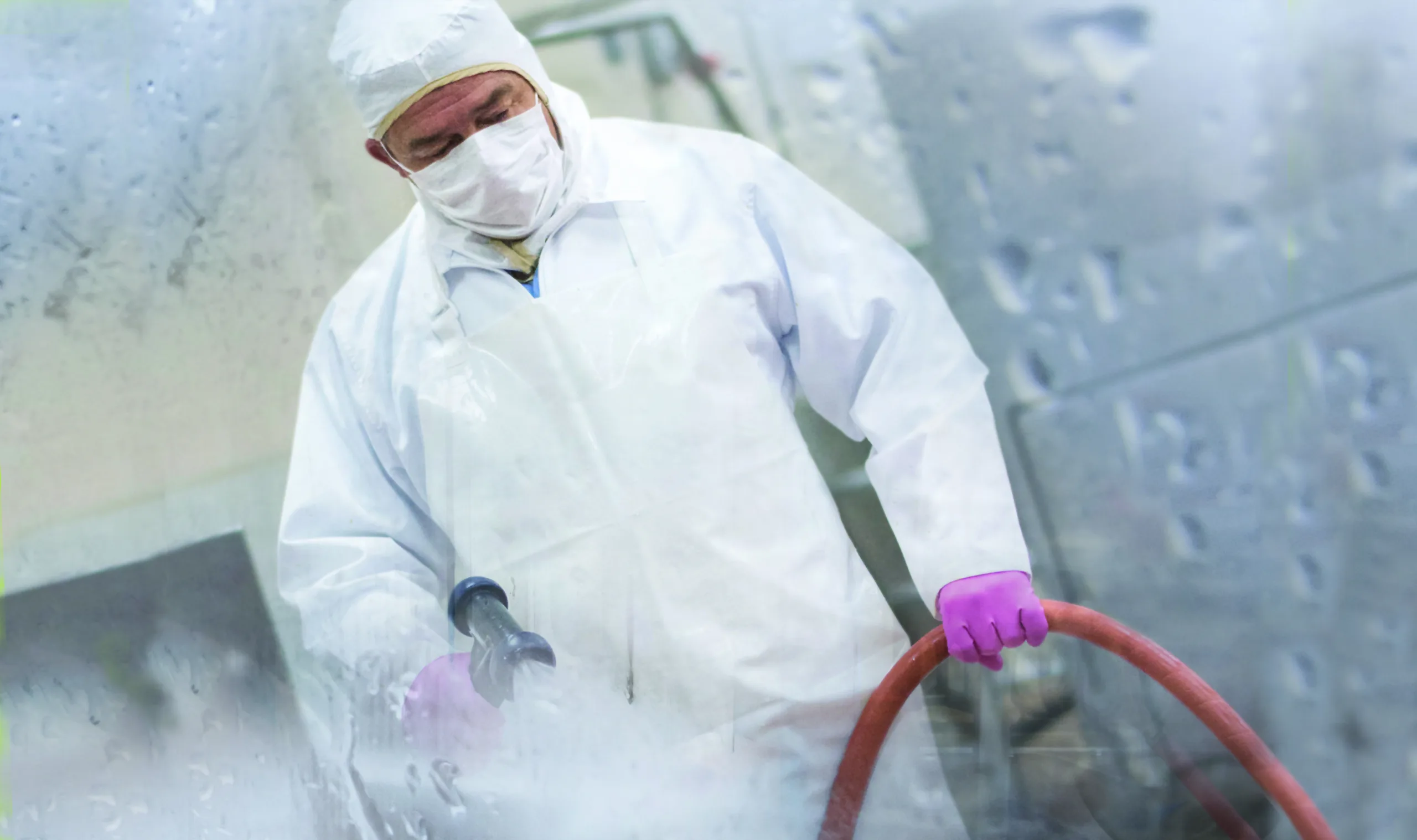
That’s the single most common failure Ozo Innovations sees when we go into food factories to review open plant cleaning (OPC) systems, and it’s rarely the only one. Most sites aren’t cleaning badly because they don’t care. They’re cleaning badly because a handful of quiet, repeatable mistakes have crept into the process and nobody’s flagged them. Here’s what we see most often, and what to do about each one.
Mistaking foam for a finished job
Foaming detergents are standard for open surfaces because foam extends contact time, which is a genuine benefit. The problem is what it’s come to mean on the factory floor: if there’s foam, the job’s being done, so leave it and check back later.
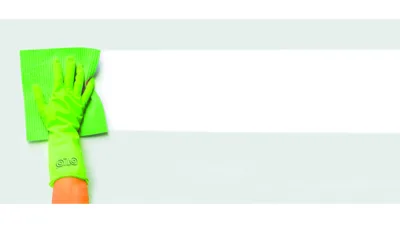
Chemical suppliers themselves don’t back that up. Most explicitly state that mechanical input, padding, scrubbing, brushing, is often required alongside the chemistry. Foam softens soil. It will lift some soils off a surface, but it won’t remove the most stubborn, often non-visible, soils off the surface on its own.
A foam-and-rinse routine with no scrubbing step is one of the fastest ways to leave residue behind while believing the site is clean.
Undervaluing mechanical action
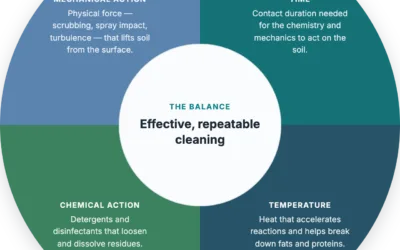
This is the mistake behind the mistake above. Cleaning performance in OPC comes from balancing four factors, known as Sinner’s Circle: time, temperature, chemistry and mechanical action. Reduce one and the others have to compensate. Most sites we assess have quietly let mechanical action drop to almost nothing, then tried to make up the difference with longer contact times or hotter water, which drives up downtime, energy use and chemical dependence without actually solving the problem.
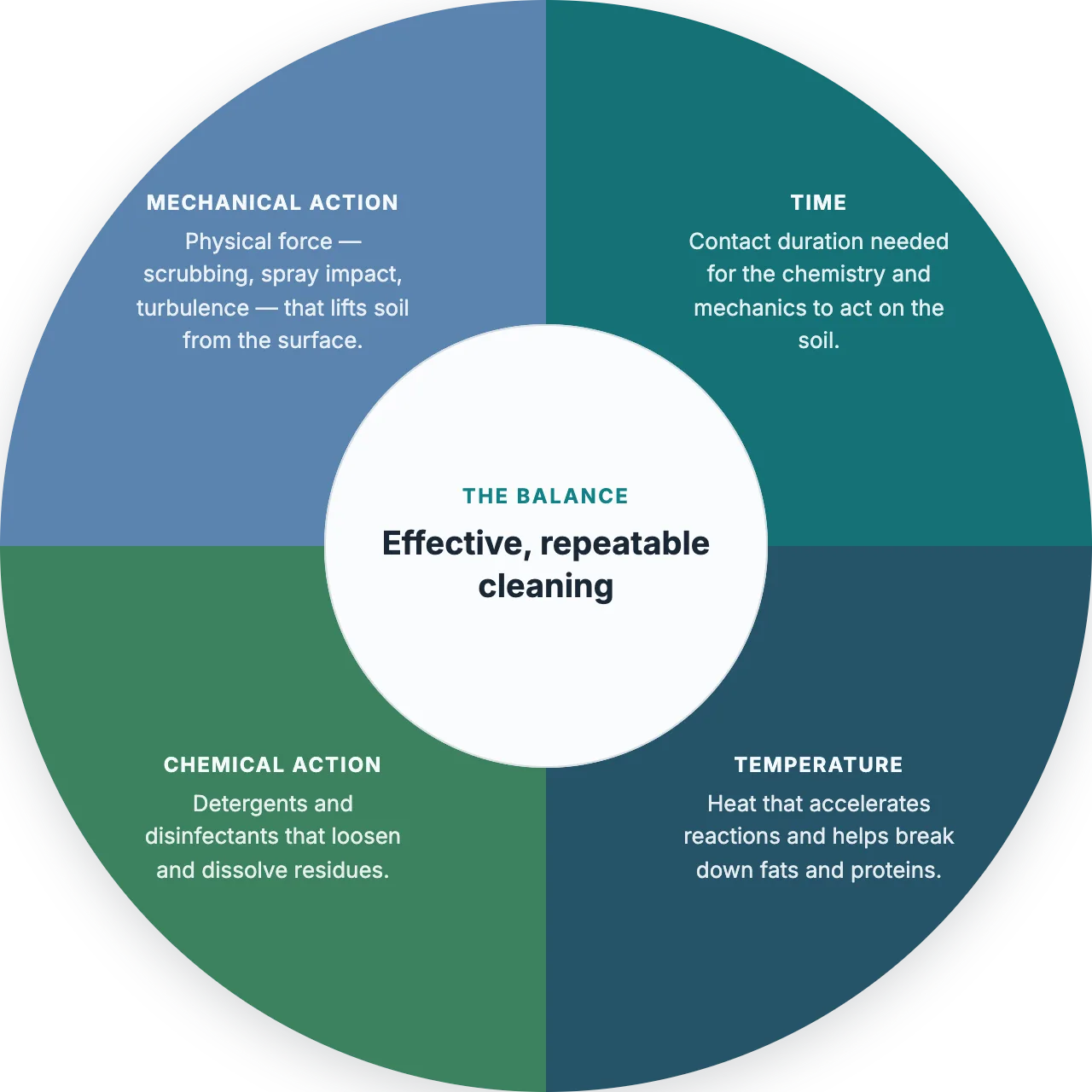
If you want the theory behind why this balance matters and how to get it right, our guide to Sinner’s Circle and the principles of cleaning walks through each factor in detail.
Ignoring non-food contact surfaces
OPC covers food contact surfaces and non-food contact surfaces alike: external machine frames, undersides of conveyors, drains, wall panels, dismantled small parts. Teams under time pressure tend to focus hard on the surfaces product actually touches and treat everything else as secondary. That’s exactly where worn seals and inaccessible joints build up biofilm harbourage, and where Listeria and other environmental organisms get the chance to establish themselves. A surface doesn’t need to touch food to become a contamination source for one that does.
Not following the chemical supplier’s own instructions
This one surprises people. We’ve seen chlorine-based chemistry diluted with water at temperatures and applied above the recommended supplier guidelines (≤50°C). Site conditions, time pressure and habit tend to override the label over time, and once a shortcut works without an obvious failure, it becomes the new normal. The instructions exist because the chemistry has been tested at those parameters. Outside them, you’re improvising.
Letting cleaning instructions fall out of step with the actual process
A cleaning instruction card gets written when a line is installed, then the line changes. A guard gets modified, a conveyor gets replaced, a new product with different soil characteristics goes down the same equipment. The physical process moves on. The instruction card doesn’t. Crews end up cleaning to a document that no longer matches what’s actually in front of them, filling the gaps with whatever they remember or were shown by the last person on shift. If the SOP hasn’t been reviewed since the last equipment change, it’s not a control document anymore, it’s a suggestion.
Treating sanitising as the same job as cleaning
Sanitisers and disinfectants reduce microbial load. They don’t remove physical residue, and residue left on a surface can actively shield organisms from the sanitiser reaching them. When cleaning and sanitising get bundled into the same mental step, verification often checks for disinfection and assumes cleaning happened along the way. It doesn’t work like that. Clean first, properly, then sanitise.
Leaving technical teams disconnected from the crews doing the actual work
Hygiene crews often work nights or weekends, well outside the hours when technical and engineering managers are on site. That gap in overlap means the people setting the SOPs rarely watch them being carried out, and the people carrying them out rarely get the chance to explain why a step doesn’t work in practice. Problems that would be obvious in five minutes of standing on the floor together instead get inferred from swab results weeks later. Closing that gap, even just occasional joint walkthroughs, surfaces more real issues than another round of paperwork ever will.
Skipping validation and trusting the paperwork
A recorded chemical concentration tells you what went into the system. It doesn’t tell you what came off the surface. Sites that document concentration and contact time but skip ATP swabbing, allergen testing or visual verification are recording compliance with a recipe, not evidence of a clean. The two get confused constantly, and it’s usually only exposed after a failed audit or, worse, a customer complaint.
What a reliable open plant cleaning system actually looks like
None of these mistakes are exotic. They’re the ordinary, repeatable habits that build up in any open plant cleaning system that isn’t actively managed as a production-critical process rather than a housekeeping task. A site that’s fixed most of them tends to share the same traits: SOPs that specify time, temperature, chemistry and mechanical action rather than chemistry alone, instruction cards that get reviewed every time the line changes, and verification that checks the surface rather than the paperwork.
Fixing them rarely means a bigger chemical budget. It usually means rebuilding your open plant cleaning system around the full theory of Sinner’s Circle, being honest about which of the four factors your site has let slide, and giving hygiene teams the standing to flag a document that no longer matches reality instead of quietly working around it.
If you want to know exactly where your open plant cleaning system is losing time, water or effective contact, Ozo Innovations’ eloclear technology has already been through this diagnosis on live production lines. Explore what it found, and what it changed.